
Introduction
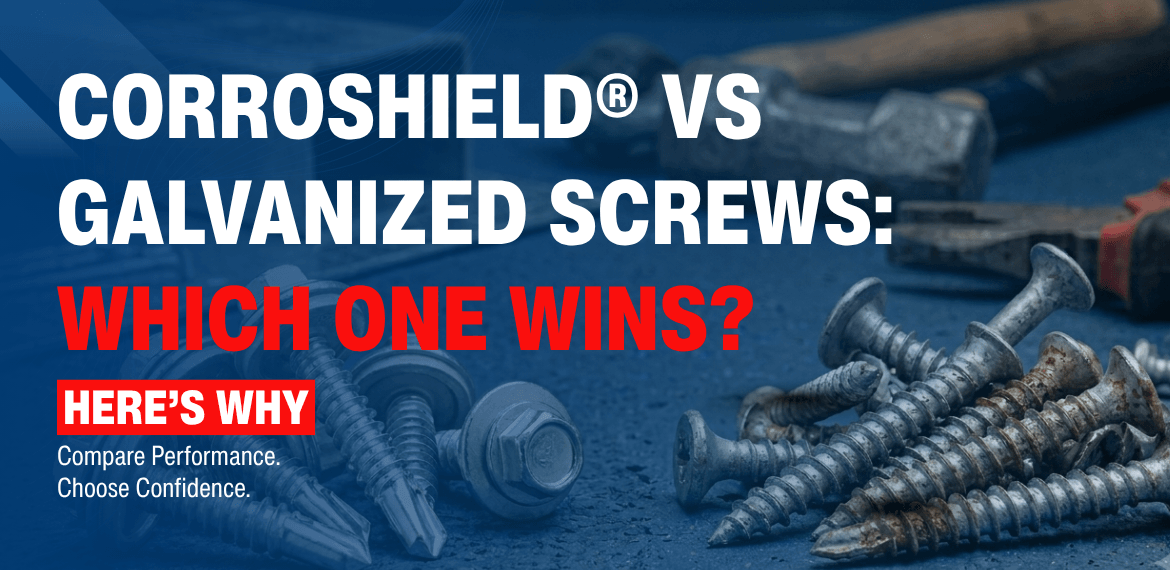
If you are choosing fasteners for roofing, cladding, steel structures, or any environment where moisture, salt, humidity, or industrial exposure is a concern, the screw coating matters as much as the screw itself. In simple terms, galvanized screws offer basic rust protection, while CORROSHIELD® screws are designed for stronger corrosion resistance and longer service life in tougher conditions.
Below is a clear, buyer friendly comparison to help you choose the right option for your project.
Quick comparison table
| Factor | CORROSHIELD® Screws | Ordinary Galvanized Screws |
|---|---|---|
| Corrosion Resistance | Higher resistance in harsh environments | Moderate protection in mild conditions |
| Best Suited For | Coastal, industrial, humid, and high exposure zones | Dry, mild, low exposure applications |
| Lifespan Expectation | Longer in demanding environments | Shorter, especially in aggressive conditions |
| Maintenance Risk | Lower risk of premature failure | Higher risk of rust and replacement over time |
| Cost | Premium investment | Lower upfront cost |
| Value Over Time | Better long-term value where corrosion matters | Better only where exposure is limited |
What is the difference between CORROSHIELD® and galvanized screws?
The main difference is in the level of corrosion protection. Galvanized screws are coated with zinc to slow rust formation, which works well in general use. CORROSHIELD® screws are engineered for stronger corrosion resistance, making them a better choice where fasteners face moisture, salt air, pollution, or frequent weather exposure.
What are galvanized screws?
Galvanized screws are steel screws covered with a zinc coating. The zinc layer acts as a protective barrier and slows down rusting. They are commonly used in general construction, light roofing work, and indoor or moderately exposed applications. Their performance is acceptable in many settings, but the protection is limited in harsh environments.
What are CORROSHIELD® screws?
CORROSHIELD® screws are corrosion resistant fasteners designed for demanding applications where ordinary galvanized screws may not last long enough. They are suited for roofing, cladding, industrial structures, and coastal or humid environments where long term performance and rust protection matter.
Which screw offers better corrosion resistance?
CORROSHIELD® screws offer better corrosion resistance than ordinary galvanized screws. Galvanized screws rely mainly on a zinc coating, while CORROSHIELD® technology is built for stronger protection against environmental attack. For projects exposed to rain, salt, humidity, or industrial air, CORROSHIELD® is the safer choice.
How long do galvanized screws last compared to CORROSHIELD®?
The lifespan depends on the environment. In mild conditions, galvanized screws can perform well for years. In coastal or corrosive areas, the zinc coating may wear faster, leading to rust and failure. CORROSHIELD® screws generally provide longer protection in harsh conditions, reducing the chance of early replacement and maintenance issues.
Are CORROSHIELD® screws worth the extra cost?
Yes, when the environment is corrosive or when failure would be expensive. The upfront cost is higher, but the long term savings can be significant because fewer replacements, less maintenance, and better structural reliability are needed. For critical roofing and cladding projects, the premium often pays for itself.
Where should CORROSHIELD® screws be used?
CORROSHIELD® screws are best for coastal areas, industrial zones, humid climates, and projects with high exposure to rain or airborne contaminants. They are also a smart choice for roofing and cladding systems, PEB structures, and commercial buildings where durability and long service life are important.
Where are galvanized screws still a good choice?
Galvanized screws are still suitable for low corrosion environments, indoor applications, and budget sensitive projects where exposure is limited. If the structure is not exposed to harsh weather, salt, or industrial pollution, galvanized fasteners may be an economical option.
Why does coating matter so much in fasteners?
The coating is the first defense against rust. Once a fastener starts corroding, it can weaken the connection, stain surrounding surfaces, and lead to expensive repairs. A better coating improves reliability, extends service life, and reduces installation failures in the long run.
Real world decision guide:
If your project is in a coastal zone, near factories, or in a humid region, CORROSHIELD® screws are usually the better option. If the project is in a mild, dry, low exposure environment and budget is the main concern, galvanized screws may be sufficient.
Pros and cons of CORROSHIELD® screws
CORROSHIELD® screws offer stronger corrosion resistance, longer service life, and better performance in demanding environments. The tradeoff is a higher initial cost, but for many buyers that cost is justified by fewer failures and lower maintenance.
Pros and cons of galvanized screws
Galvanized screws are affordable, widely available, and suitable for many standard applications. Their limitation is lower durability in aggressive conditions, which can lead to earlier rusting and replacement.
Key terms to know:
Corrosion resistant screws are fasteners designed to resist rust and degradation in harsh environments. Galvanized screws lifespan refers to how long the zinc coated screw can perform before corrosion becomes a concern. Fastener coating comparison means evaluating how different coatings protect the screw over time. Rust protection screws is a general term for screws made to delay rust formation. Zinc coating vs advanced corrosion protection compares basic protective galvanization with higher performance coating systems.
Frequently Asked Questions
Final recommendation:
For buyers seeking reliable performance in corrosion prone environments, CORROSHIELD® screws are the better long term choice. For general use in low exposure areas, galvanized screws remain a practical budget option. The right decision depends on the environment, service life expectations, and the cost of future maintenance.