
Introduction
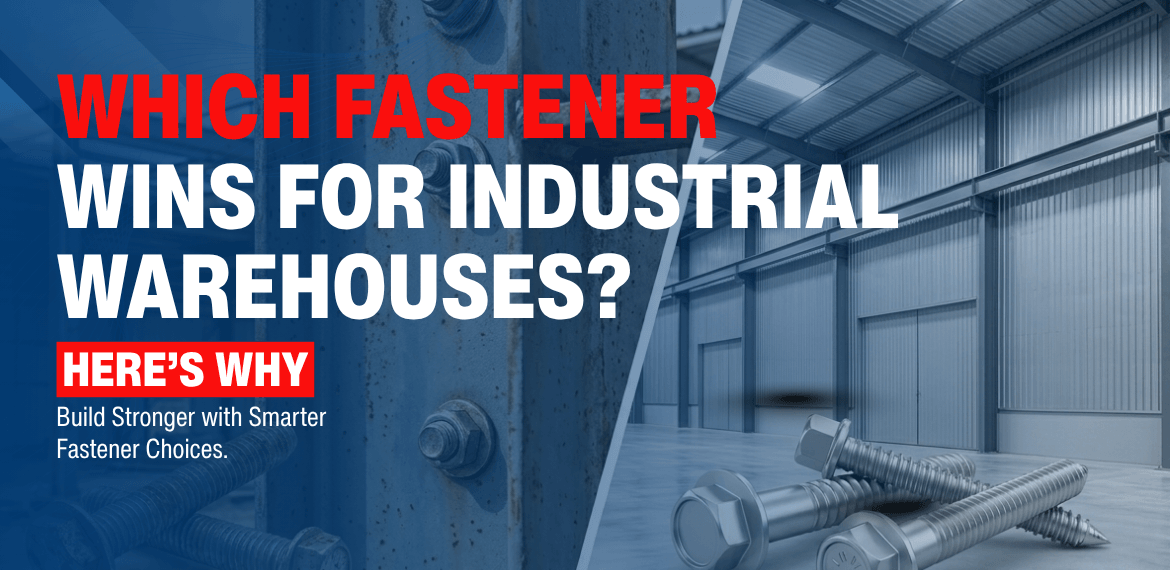
Industrial warehouse projects in India demand reliable, durable and compliant fasteners. The right industrial warehouse fasteners directly impact structural integrity, roof performance, lifecycle cost and safety. This guide helps engineers, contractors and procurement teams select the right fasteners for steel structures, roofing and cladding in Indian conditions.
What fasteners are used in industrial warehouse construction in India?
Industrial warehouses in India typically use a combination of structural and roofing/cladding fasteners. Structural members are connected with high tensile bolts and nuts, while roofing and wall sheets use self drilling screws with sealing washers. Accessories, purlins, bracings and ancillary components use a mix of screws, anchor fasteners and rivets depending on load and substrate.
Structural vs roofing and cladding fasteners – what is the difference
Structural fasteners primarily carry gravity, wind, seismic and impact loads between steel members. They include high tensile bolts for steel structures, nuts, washers and anchor systems. Roofing and cladding fasteners mainly fix thin metal sheets to purlins or girts while ensuring watertightness. They use self drilling screws for metal roofing with bonded washers, corrosion resistant coatings and controlled embedment into steel.
Key fastener categories for industrial warehouse projects
Engineers should think of industrial warehouse fasteners in four main categories based on application and function. This simplifies specification, prevents misapplication and improves performance on site.
1. Primary steel structure connections
These include column to base plate, beam to column, rafter to column and bracing connections. High tensile bolts for steel structures in India are typically used in property classes equivalent to 8.8 or 10.9 with appropriate nuts and hardened washers. These fasteners are governed by structural design loads and Indian codes.
2. Secondary members and purlins
Purlins, girts and side rails are usually cold formed sections fixed to rafters and columns. Structural connections here can use smaller diameter high tensile bolts or specialized self drilling fasteners into steel sections, depending on design. Careful selection of steel structure fasteners India wide ensures secondary framing behaves as intended under wind uplift and lateral loads.
3. Roofing fasteners for warehouses
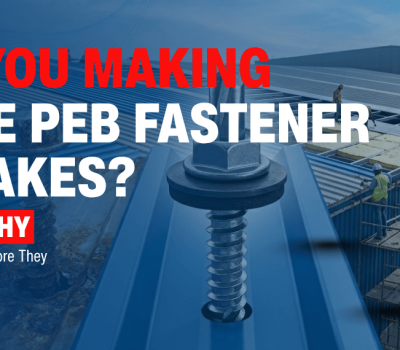
Roof sheeting in warehouses typically uses self drilling screws for metal roofing. These fasteners drill, tap and fasten in one operation, reducing installation time and ensuring consistent performance. Roofing fasteners for warehouses must provide strong pull-out resistance, secure sealing through bonded washers and long term corrosion resistance in Indian climates.
4. Cladding fasteners and accessories
Wall cladding uses similar self drilling fasteners with different lengths, head types and color matched heads for aesthetics. Cladding fasteners India projects often also include fixings for louvers, ventilators, skylights, gutters, downpipes and flashings. Selecting compatible industrial warehouse fasteners ensures uniform performance and appearance across the envelope.
How to choose fasteners for steel warehouse structures in India?
Choosing the right warehouse construction fasteners requires a logical, stepwise approach. The decision must link application, substrate thickness, environment, load requirement and standards.
In simple terms, start by identifying the component being fixed, the type and thickness of steel, the environment category and the design load path. Then choose the fastener category, size, material and coating that meets those needs while complying with Indian practice.
Step by step fastener selection guide for industrial warehouses
Use this practical flow to select industrial warehouse fasteners from design to procurement.
Step 1: Define the application
Ask a clear question before selecting any fastener. Is the connection a primary structural joint, a purlin or girt connection, a roofing sheet fixation, a side cladding connection or an accessory detail. Primary structural joints almost always require high tensile bolts. Roofing and cladding almost always require self drilling screws with sealing washers. Avoid mixing these categories.
Step 2: Identify base material and thickness
Note whether the fastener is going into hot rolled sections, cold formed purlins, built up members or thin sheet metal. Measure or confirm steel thickness at the connection point. This directly affects drill point type, thread length and overall screw length. For example, self drilling screws for metal roofing need point types capable of penetrating purlin thickness within reasonable drilling time without burning the coating.
Step 3: Determine environment and corrosion class
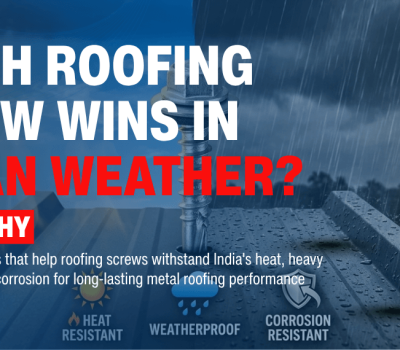
India has diverse climatic zones, from coastal saline regions to high humidity industrial belts and dry inland areas. Corrosion resistant fasteners India projects require matching coating class or stainless steel grade to the environment. Coastal and heavy industrial zones need superior corrosion protection technologies such as high performance organic coatings, metal alloy coatings or stainless steel. Mild urban and rural locations may be served by zinc or zinc alloy coated steel structure fasteners India wide when coupled with good detailing.
Step 4: Evaluate structural load and safety factors
For primary structural fasteners, use design loads derived from IS based wind, seismic and dead load combinations. Select high tensile bolts for steel structures that meet or exceed calculated shear and tension requirements while considering prying and slip. For roofing fasteners for warehouses, focus on pull-out and pull-over resistance under peak wind uplift pressures. Ensure load capacity of individual self drilling screws for metal roofing exceeds design values with an adequate safety margin.
Step 5: Choose fastener size and embedment depth
Incorrect diameter, length or embedment is a common cause of failure. The screw or bolt must engage sufficient threads in structural steel or nut to develop its rated capacity. For roofing and cladding fasteners, ensure minimum penetration beyond the purlin flange. Overly long screws can damage inner surfaces, while short screws may strip or fail under load. In all cases, follow manufacturer recommendations suited to industrial warehouse fasteners in India rather than using generic thumb rules.
Step 6: Select washer and sealing system
Watertight performance depends heavily on the washer system. High quality roofing fasteners for warehouses use bonded EPDM or similar elastomeric washers that maintain elasticity in Indian heat and UV exposure. Washer diameter, hardness and compression must be matched to sheet profile and thickness. Inadequate washers or poor installation leads directly to leakage and corrosion around fastener holes.
Step 7: Verify compatibility and standards
Finally, confirm that the chosen fastener is compatible with the steel grade, sheet coating and structural design assumptions. Check that the product, especially industrial warehouse fasteners used in India, aligns with relevant Bureau of Indian Standards where applicable and follows best practice for steel structures. Preference should be given to recognized brands with documented testing, quality control and technical support.
Fastener specification table – typical warehouse applications
The following indicative specification pattern helps structure design notes and purchase descriptions. Actual values must be confirmed from project design and manufacturer data.
For primary frames, specify high tensile bolts for steel structures with defined property class, diameter, length, nut type and washer type. For secondary members, define diameter, head type and coating of steel structure fasteners India projects require. For roofing and cladding, define self drilling screws for metal roofing by diameter, thread length, overall length, drill point type, coating system and washer specification. For accessories, define appropriate small diameter warehouse construction fasteners with compatible coatings and heads.
How to choose corrosion resistant fasteners for Indian environments?
Corrosion performance is one of the most critical factors for industrial warehouse fasteners in India. The selection must consider both external and internal environment, including pollution, humidity and chemical exposure.
In coastal areas and saline zones, use fasteners with advanced corrosion protection, such as specialized coatings or suitable stainless steel grades, combined with compatible washers. In industrial zones with chemical fumes or high humidity, choose corrosion resistant fasteners India projects can rely on, with proven resistance to red rust and coating breakdown. In normal urban and rural zones, zinc or zinc alloy coatings may be adequate when detailing prevents water stagnation around fastener heads.
What size fasteners are used for metal roofing sheets?
The typical diameter of roofing fasteners for warehouses ranges from smaller to moderate sizes depending on sheet profile, purlin type and wind loads. The length is selected to pass through the crest of the sheet, the insulation if present and fully penetrate the purlin flange with sufficient thread engagement. Engineers should always calculate or verify the required pull-out capacity, then derive the minimum screw size and embedment. Avoid using a single standard size across the whole project without checking local load and span variations.
Common mistakes in fastener selection for warehouses:
Several recurring errors cause leaks, failures and unexpected maintenance in industrial warehouse fasteners. One error is using roofing self drilling screws in structural roles where high tensile bolts are needed. Another is underestimating environment severity and choosing basic coatings in coastal or industrial areas. Many projects suffer from inadequate washer quality, leading to early water ingress. Over specification can also occur when very high grade fasteners are used where moderate grades would suffice, increasing cost without benefit.
Cost versus performance – how to balance
Optimizing cost does not mean choosing the cheapest fastener. For industrial warehouse fasteners, total lifecycle performance is more important than initial price. The right balance is achieved when the fastener meets structural, sealing and corrosion requirements with a reasonable safety margin while keeping material and installation costs under control. Coastal or high exposure projects justify premium corrosion resistant fasteners India wide, because premature corrosion leads to roof replacement, production downtime and safety risks that far exceed the difference in fastener cost. In benign environments, a properly designed system using standard warehouse construction fasteners can provide long service life at competitive cost.
Compliance and standards for fasteners in industrial warehouses
While specific fastener products may follow international norms, the overall warehouse design in India is guided by national standards covering steel structures, loading, wind and seismic actions. Engineers must ensure that the design assumptions for connections match the performance data of selected industrial warehouse fasteners. Compliance is not only about material grade and coating but also about proper detailing, installation torque and inspection. Strong documentation from recognized suppliers supports audit, insurance and client acceptance.
Practical scenarios for fastener selection
Consider a coastal logistics warehouse with metal roofing and wall cladding exposed to salt laden winds. Here, the recommended solution would be high tensile bolts for steel structures for the primary frame and corrosion resistant self drilling screws for metal roofing with high performance washers for the envelope. In contrast, for an inland dry zone warehouse with limited pollution, standard yet good quality steel structure fasteners India manufacturers supply, combined with reliable roofing fasteners for warehouses, can deliver adequate performance with cost efficiency. Pre engineered buildings often fall between these cases and use a mix of optimized structural fasteners and self drilling screws for metal roofing designed specifically for that system.
Checklist for selecting industrial warehouse fasteners
A simple but rigorous checklist helps ensure consistent decisions on site and during procurement. Confirm the application type, base material and thickness. Verify environment category and needed corrosion class. Check structural load requirements and safety factors. Select diameter, length and embedment to meet or exceed calculated demands. Ensure washer type and sealing arrangement match the roofing and cladding details. Confirm compatibility with sheet coatings and steel grades. Finally, validate that chosen industrial warehouse fasteners meet supplier documentation, testing evidence and Indian design practice.
FAQ – Fasteners for industrial warehouse projects in India
By using structured decision logic, India specific environmental understanding and reliable branded products, engineers and contractors can confidently select industrial warehouse fasteners that protect structures, prevent leaks and optimize long term cost and performance.