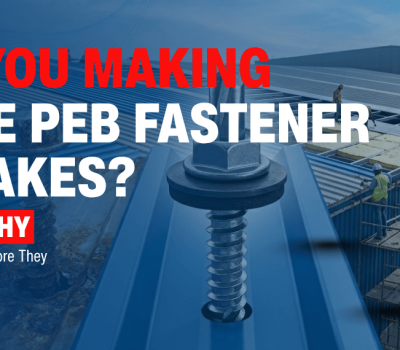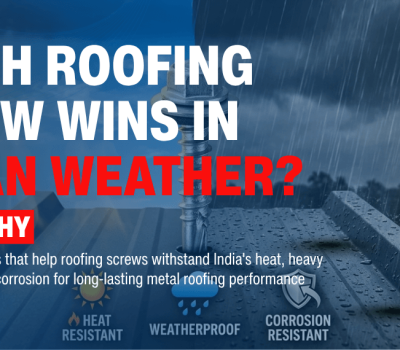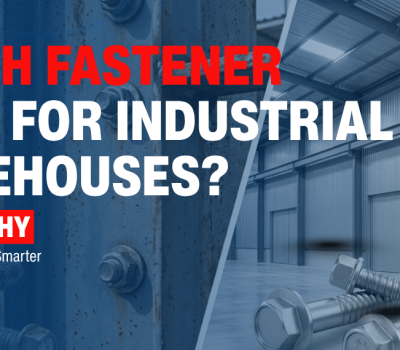

What are PEB fasteners and why are they critical?
Pre engineered building (PEB) fasteners are specialized screws and anchors designed to connect metal roof sheets, wall cladding, insulation layers and structural members like purlins and girts. They may be a small percentage of project cost, but they directly control roof watertightness, long term corrosion performance, wind uplift resistance and overall structural reliability. Selecting the correct PEB fasteners prevents leakage, premature corrosion, load failures and costly rework over the life of the building.
What fasteners are used in PEB roofing?
For PEB roofing, the most common solutions are corrosion resistant construction fasteners in the form of self drilling screws for PEB, designed specifically for metal roofing sheets fixed to steel purlins, rafters or decking.
Typical PEB roofing fasteners include:
Self drilling roofing screws with sealing washer
These are purpose designed PEB roofing fasteners that drill, tap and fasten in a single operation. They usually have: a special drill point for quick penetration into steel, a thread profile optimized for sheet pull down, a corrosion resistant coating, and an integral EPDM bonded washer for long term waterproofing.
Fasteners for roof sheeting to purlins
Where primary roofing sheets are fixed to cold formed purlins or hot rolled sections, the fastener must match the purlin thickness, roof profile and design wind loads. Longer lengths and large diameter shanks are used for high wind uplift zones and ridges.
Stitching screws for side lap joints
Short self drilling screws or self tapping screws are used to stitch two overlapping roof sheets together at side laps to prevent flutter, noise and capillary water entry.
Accessories and special fasteners
These include screws for flashing and ridge components, crest fixing of profiles, roof light fixing and fasteners for insulation support systems.
Corroshield brand roofing fasteners available through Asons Enterprise are engineered to meet these demanding requirements with advanced coating systems and precise drill point technology.
What is the difference between roofing and cladding fasteners in PEB projects?
Roofing and wall cladding work under different exposure conditions and load patterns, so their fasteners are optimized accordingly. Confusing the two is one of the most common causes of leakage and performance issues in PEB projects.
Key differences between roofing and cladding fasteners:
Application:
Roofing fasteners are designed for high exposure to rain, UV radiation, ponding risk and up lift loads. Cladding fasteners work mainly under lateral wind loads and less frequent direct water ponding.
Washer and sealing design:
Roofing screws always require high quality sealing washers because every penetration in the roof plane is a potential leakage point. Wall cladding fasteners may use smaller washers or aesthetic head designs, but in exposed vertical joints sealing is still important.
Embedment and pull out:
Roofing connections are critical for wind uplift. Roof screws typically have higher pull out resistance and deeper embedment into the structural member. Cladding screws can be shorter where loads are lower and spans are smaller.
Corrosion exposure:
Roof fasteners often experience higher corrosion due to standing water, condensation and temperature cycling. This makes coating class and fastener material selection critical over roof areas, especially in industrial and coastal environments.
In simple terms, PEB roofing fasteners prioritize watertightness and uplift resistance, while PEB cladding fasteners prioritize panel alignment, appearance and resistance to suction and pressure from wind.
How do corrosion protection classes affect PEB fastener selection?
Incorrect fastener grade is one of the primary reasons for early corrosion in metal building fasteners on industrial sites. The coating class and material should match the environmental exposure, not just the project budget.
For PEB structures, typical exposure categories include:
- General Inland Industrial Buildings
- Moderate Airborne Pollution
- Coastal Regions with Salt Spray
- Chemical Processing Zones and Effluent Areas
- High Humidity Manufacturing or Food Processing Plants
In moderate to harsh environments, standard zinc plated screws are not sufficient for long life. Instead, advanced corrosion protection technologies such as high build organic coatings, mechanically plated zinc alloy systems or specialized proprietary coatings as used in Corroshield screws provide significantly extended service life.
When selecting fasteners for pre engineered buildings, engineers and contractors should:
- Match the coating class or specification to the design life of the building.
- Use higher-class coatings for roofing applications than for sheltered interior connections.
- Specify non-ferrous or stainless steel solutions in highly aggressive environments where required.
- Ensure washer materials (EPDM quality and UV resistance) match the service life of the fastener.
Asons Enterprise, as the sole distributor of the Corroshield brand in India, supplies fasteners engineered specifically for these demanding environments, helping PEB projects maintain long term corrosion performance.
What size fasteners are used in PEB structures?
Fastener size in PEB structures is defined by three main parameters: diameter, length and thread configuration. Choosing the wrong combination can result in load failure, stripping, poor pull out resistance or panel damage.
Typical roofing and cladding fastener sizes
Below is a simplified specification style table for guidance. Actual selection should follow project design calculations, panel manufacturer recommendations and fastener data sheets.
| PEB Fastener Size Reference Guide | |||
|---|---|---|---|
| Typical Roofing and Cladding Fastener Sizes for Pre Engineered Buildings (PEB) | |||
| Component | Diameter Range | Typical Length Range | Typical Application |
| Roof Sheet to Purlin | 4.8 – 6.3 mm | 45 – 80 mm | Metal roof sheet to steel purlin |
| Roof Crest Fixing | 5.5 – 6.3 mm | 65 – 100 mm | High rib profiles, insulation build-ups |
| Side Lap Stitching | 4.2 – 4.8 mm | 16 – 25 mm | Sheet-to-sheet stitching at side laps |
| Wall Cladding to Girt | 4.8 – 6.3 mm | 25 – 65 mm | Single-skin or insulated wall panels |
| Liner Sheet to Member | 4.2 – 4.8 mm | 16 – 30 mm | Interior liners and ceilings |
| Accessories / Flashing | 4.2 – 4.8 mm | 19 – 50 mm | Flashings, trims, ridge, gutters |
For accurate specification, engineers should also confirm: steel thickness of purlins and girts, total cladding build up thickness including insulation and spacer systems, required minimum embedment into the structural member as per pull out tests, and any specific requirements from the PEB system supplier.
Are self drilling screws suitable for PEB buildings?
- Self-drilling screws are not only suitable for PEB buildings, they are also the preferred choice for most modern PEB roofing and wall cladding systems.
- Self-drilling screws for PEB combine drilling, tapping, and fastening into a single operation, significantly reducing installation time and alignment errors while improving consistency. For industrial and commercial metal buildings, high-quality self-drilling PEB fasteners offer:
- Controlled, repeatable drilling performance in steel purlins and girts.
- Reduced risk of over-drilling or damaging metal profiles.
- Better seating of washers and more uniform clamp force.
- Lower risk of swarf build-up when using properly designed drill points.
- Corroshield self-drilling screws, supplied in India by Asons Enterprise, are specially engineered for demanding site conditions and harsh environments, making them a trusted choice for PEB roofing and PEB cladding fasteners.
How to select the right fastener for PEB roofing and cladding: a practical decision flow?
Use the following engineer friendly decision sequence to minimize mistakes and align with best practice in metal building fasteners.
Step 1: Define application zone
If application is roof panel to purlin on external slope:
Use high performance PEB roofing fasteners with corrosion resistant coating, structural diameter (typically 5.5 or 6.3 mm), appropriate length for sheet and insulation thickness, and bonded EPDM sealing washer.
If application is wall cladding to girt in external zone:
Use PEB cladding fasteners with suitable diameter (4.8 – 6.3 mm depending on load and span), selected for aesthetics (head color, profile compatibility) and environmental exposure. Washer design can vary by façade detail but in exposed joints sealing is strongly recommended.
If application is side lap or sheet to sheet stitching:
Use short length stitching screws of smaller diameter with fine threads, designed to prevent sheet distortion while securing side laps against wind flutter and leakage.
If application is interior liner or ceiling panels:
Use light duty self drilling screws optimized for thin sheet to light gauge members, focusing on neat appearance and adequate pull out capacity rather than heavy corrosion protection.
Step 2: Confirm substrate and thickness
For cold formed steel purlins and girts:
Select drill point type and length to penetrate the steel thickness in one operation, ensuring sufficient thread engagement.
For hot rolled structural members:
Use larger diameter screws with extended drill points designed to penetrate thicker steel sections.
For composite or sandwich panels:
Choose fasteners tested for the specific panel type, considering compression of the core, washer size and clamp force.
Step 3: Match corrosion class to environment
For general industrial inland projects:
Use high quality coated PEB fasteners with proven salt spray performance and UV stable washers.
For coastal, chemical or high humidity zones:
Upgrade to premium corrosion resistant construction fasteners with advanced coating systems, and consider higher specification products on roof planes and windward elevations.
Step 4: Check embedment and load performance
- Verify the minimum embedment into steel as specified in the fastener data sheets.
- Confirm that the pull-out and pull-over capacities meet the required design loads, including wind uplift and suction forces on roof and wall panels.
- Select the appropriate fastener diameter and thread type to achieve the required structural capacity while ensuring practical installation torque.
Common fastener related problems in PEB roofing and cladding:
Despite using quality products, PEB projects often experience repeated issues due to selection or installation mistakes.
Confusion between roofing and cladding fasteners
Using wall cladding screws on roof slopes can lead to inadequate sealing, lower pull out capacity and premature corrosion in ponding zones. Always distinguish between roofing and PEB cladding fasteners in drawings and schedules.
Incorrect fastener grade in aggressive environments
Specifying generic screws instead of engineered metal building fasteners in chemical plants, coastal yards or industrial clusters causes red rust, washer degradation and costly replacement within a few years. Environmental exposure classification should be a mandatory part of fastener specification.
Load failure from wrong diameter or embedment
Underestimating wind uplift, especially on wide span PEB roofs, results in insufficient screw diameter or shallow embedment in purlins. This can manifest as sheet flutter, fastener loosening or even panel blow off in extreme storms. Design checks must include manufacturer tested load tables.
Washer and sealing issues causing leakage
Over tightening can crush washers and deform sheets, while under tightening leaves gaps for capillary action. Using poor quality rubber or non UV resistant materials leads to cracking and leakage over time.
Compatibility problems with panels and members
Mismatched head profiles can distort profiled sheets. Incorrect point type for thick steel causes burning, slow drilling and excessive swarf. Incompatible coatings between fastener and panel can create galvanic corrosion. Always align fastener specification with panel manufacturer recommendations and use proven systems such as Corroshield screws for metal buildings.
Installation best practices to reduce leakage and rework
Correct fastener selection must be supported by disciplined installation methods on site.
- Use calibrated screw guns instead of impact drivers to achieve consistent torque and prevent over-driving.
- Ensure the screw is installed perpendicular to the sheet to avoid washer distortion and elongated holes.
- Clean swarf from roof and wall surfaces regularly to prevent rust spots and corrosion.
- Follow the recommended screw pattern and spacing for each profile and exposure zone.
- Install PEB roofing fasteners starting from the leeward end and work systematically to maintain proper sheet alignment and lap positioning.
- Inspect washer seating visually. The washer should be evenly compressed without being over-squeezed.
Standards and compliance for fasteners in PEB structures
To provide engineers, consultants and procurement teams with confidence, PEB fasteners should comply with relevant international or national standards and testing protocols.
Typical considerations include:
Base material and mechanical properties in line with recognized fastener standards Coating performance validated through neutral salt spray and cyclic corrosion tests Pull out, pull over and shear testing on representative purlin and panel systems Compliance with roofing system guidelines and building code requirements for wind loads and serviceability.
Working with established fastener manufacturers and distributors allows you to obtain test reports, certificates and clear technical data, supporting specification decisions and project documentation.
Common specification mistakes to avoid in PEB fasteners
- Avoid using generic descriptions such as “roofing screw” without specifying the diameter, length, material, and coating.
- Do not ignore the environmental exposure classification when selecting the appropriate fastener grade.
- Avoid using a single fastener type for all connections (roof, wall, lap, and accessories). Instead, use a coordinated set of fasteners designed for each application.
- Always specify the washer material and dimensions according to the intended application.
- Do not overlook the need for color-matched screw heads on architectural facades to maintain a consistent appearance.
- Do not leave fastener selection entirely to site teams without providing documented fastener schedules and installation guidelines.
By addressing these points at design and tender stage, PEB contractors, structural engineers and procurement managers can significantly reduce installation errors and long term maintenance issues.
Scenario based recommendations for typical PEB projects
Light industrial warehouse in inland location:
- Use standard PEB roofing fasteners with proven corrosion-resistant coatings and EPDM washers on all roof slopes.
- Use PEB cladding fasteners with a matching finish for side walls, including color-matched heads where architectural aesthetics are important.
- Use stitching screws for side laps and ridge joint details in accordance with the roofing profile manufacturer’s recommendations.
Coastal logistics hub or port warehouse:
- Upgrade to higher corrosion-class metal building fasteners for all roof areas and heavily exposed wall zones.
- Pay special attention to fasteners installed near eaves, ridges, and joints that face the prevailing winds.
- Specify enhanced-quality washers and include regular inspection intervals in the building maintenance plan.
Food processing or high humidity facility:
- Use fasteners and washers with high resistance to condensation and cleaning chemicals
- Consider internal liner fasteners with coated heads and compatible materials to avoid staining or corrosion inside the building.
Heavy manufacturing plant with cranes and large spans:
- Coordinate with structural engineer to confirm fastener spacing and diameter for high uplift zones.
- Use larger diameter PEB roofing fasteners in ridge and corner areas and verify pull out capacity using manufacturer data.
In each scenario, partnering with a specialist distributor like Asons Enterprise and using engineered Corroshield PEB fasteners helps align product selection with real world operating conditions.
FAQ: Fasteners for PEB roofing and cladding
A carefully engineered combination of the right PEB fasteners, correct corrosion protection, appropriate sizes and disciplined installation practices is essential for reliable roofing and cladding in pre engineered buildings. By using specialized solutions such as Corroshield self drilling screws for PEB structures supplied by Asons Enterprise, project stakeholders can significantly improve performance, reduce callbacks and build durable, leak free industrial and commercial facilities.